Developing Basic Internet Safety and Media Literacy Skills
Seeing is not always believing and sharing is not always caring
Vanessa Otchere
Have you ever considered your safety on the internet? In an era where practically everything is going digital, with many activities transitioning online, one should be concerned about how to be safe online. As many online interactions involve sharing personal data and leaving digital footprints on the web, many individuals, companies and countries have increasingly become concerned about cyber safety and the ramifications of privacy breaches.
Another issue worthy of concern is our ability to tell whether the information we receive through online platforms is accurate. This is crucial since we make important decisions based on what we know, which is increasingly influenced by what we interact with online. We run the risk of being misinformed on key topics like climate change, political happenings, and the COVID-19 pandemic if we do not take care to properly evaluate information we receive.
In an effort to increase awareness on cybersecurity and media literacy, this month’s Community Call was focused on exploring the concept and practice of internet safety and mis/disinformation. We were joined by three knowledgeable speakers on the Cyber Security to share tips on how to stay safe on the internet.
The session began with a brief round of introductions from participants and invited speakers. The first speaker, Confidence Mawusi, set the ball rolling by delineating the objectives for the session. In his opening statements he mentioned that “in our normal environment we have personal safety measures, however we pay least attention to our safety online”. He defined online safety as acting safe on the internet and taking precautions to be safe. Confidence went ahead to state some internet threats and risks based on the actor/ internet user and threats based on devices. Some cases included cyberbullying, cyber dating abuse and sexting. He further shared a personal story of his experience with ransomware and stated other threats targeted at user devices: spam, adware, phishing and keyloggers.
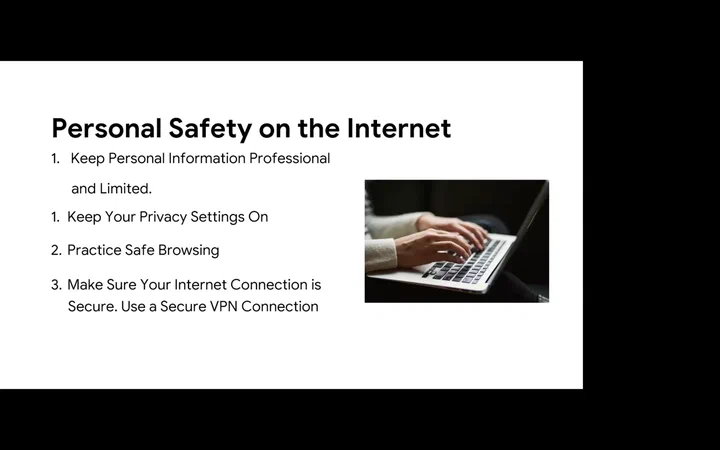
After exploring the concepts and examples of internet risks, Confidence further shared some pointers on how to detect phishing and discussed malware and malware detection and prevention. Touching on Media Literacy, Confidence quoted Mark Twain “A lie can travel around the world and back again while the truth is lacing up its boots.” to illustrate how fast fake news travels. He shared how the human desire to satisfy curiosity hastens the proliferation of fake news. Confidence illustrated the difference between misinformation and disinformation and shared some approaches to break the cycle of disinformation. Some examples include fact checking and reading complete articles.
Computers will be computers , technology will be technology, in the end it is ethics and philosophy that will help us’
Next, Vanessa Otchere took off by explaining the key terminologies; Infodemic, disinformation, misinformation, malinformation, media and information literacy.
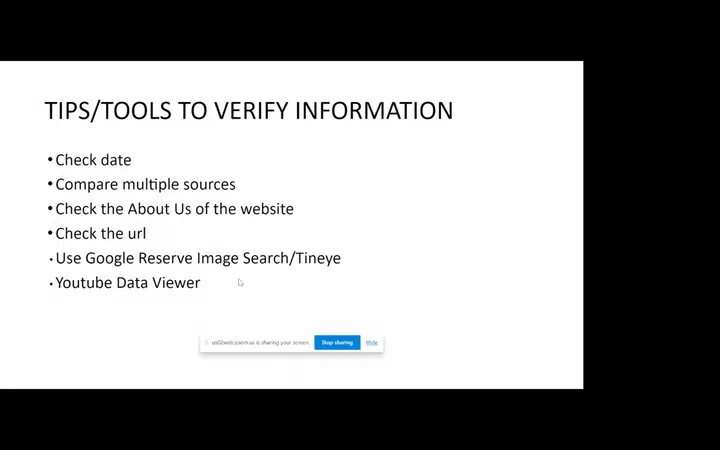
She discussed the social psychology behind mis and disinformation which included the filter bubble, heuristics – mental shortcuts that help people solve problems quickly – and confirmation bias – interpreting and recalling information that reinforces our beliefs. Some practices she recommended to verify information were: comparing multiple sources of information, checking URLs, and being aware of underlying agenda of the information source. She concluded on the note “the ecosystem of information is a complex one and so is the technological age in which we live in. It’s everyone’s responsibility to verify information before sharing.” The session continued with participants offering feedback and sharing their filter bubbles.
Obasegun Ayodele of VilSquare in Nigeria joined us to share his work on the Glass Room project which is focused on how best to tackle fake news across Africa. Following the deeply engaging and incisive discussion, the session was concluded by Confidence sharing three helpful hints;
Social media will affect your mental health. On the internet, if you are not buying the product, you are the product and also, the internet never forgets. `Its either you have been hacked or about to be hacked.
Confidence Mawusi
After the revealing presentations and discussion, the event ended with a networking session.
You are welcome to be a part of the Global Lab Ghana Community on Facebook. Follow us on Twitter and subscribe to our YouTube Channel to be updated on our various activities.
Another exciting Science Cafe session is loading. Make a date with us!
 Play video: Video from “Developing Basic Internet Safety and Media Literacy Skills”